

2025-10-11 10:32:10
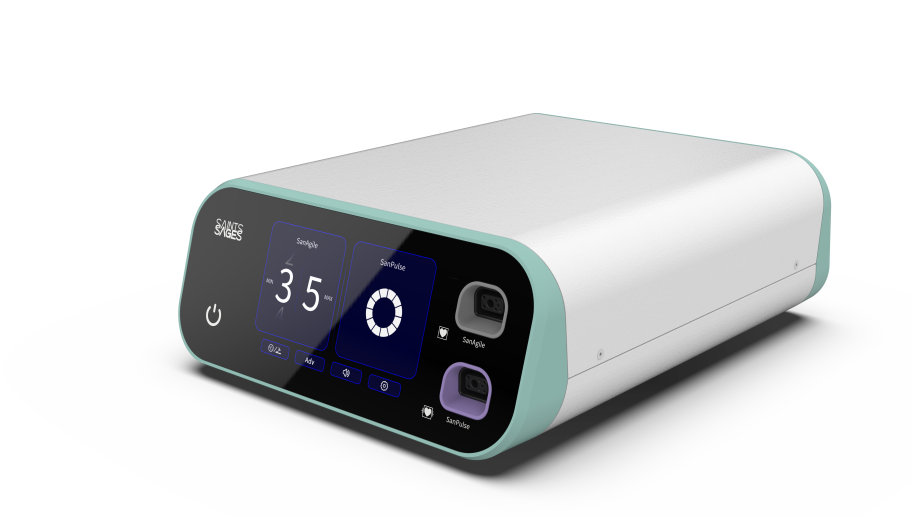
Following the successful approval of the SA10 series for CE - MDR and FDA, a major breakthrough has been achieved in the world - leading surgical energy platform of Saints Sages Surgical. Recently, the new "Ultrasonic High - Frequency Integrated Surgical Device SA100" has successfully completed the first overseas animal experiment and multi - dimensional performance verification.
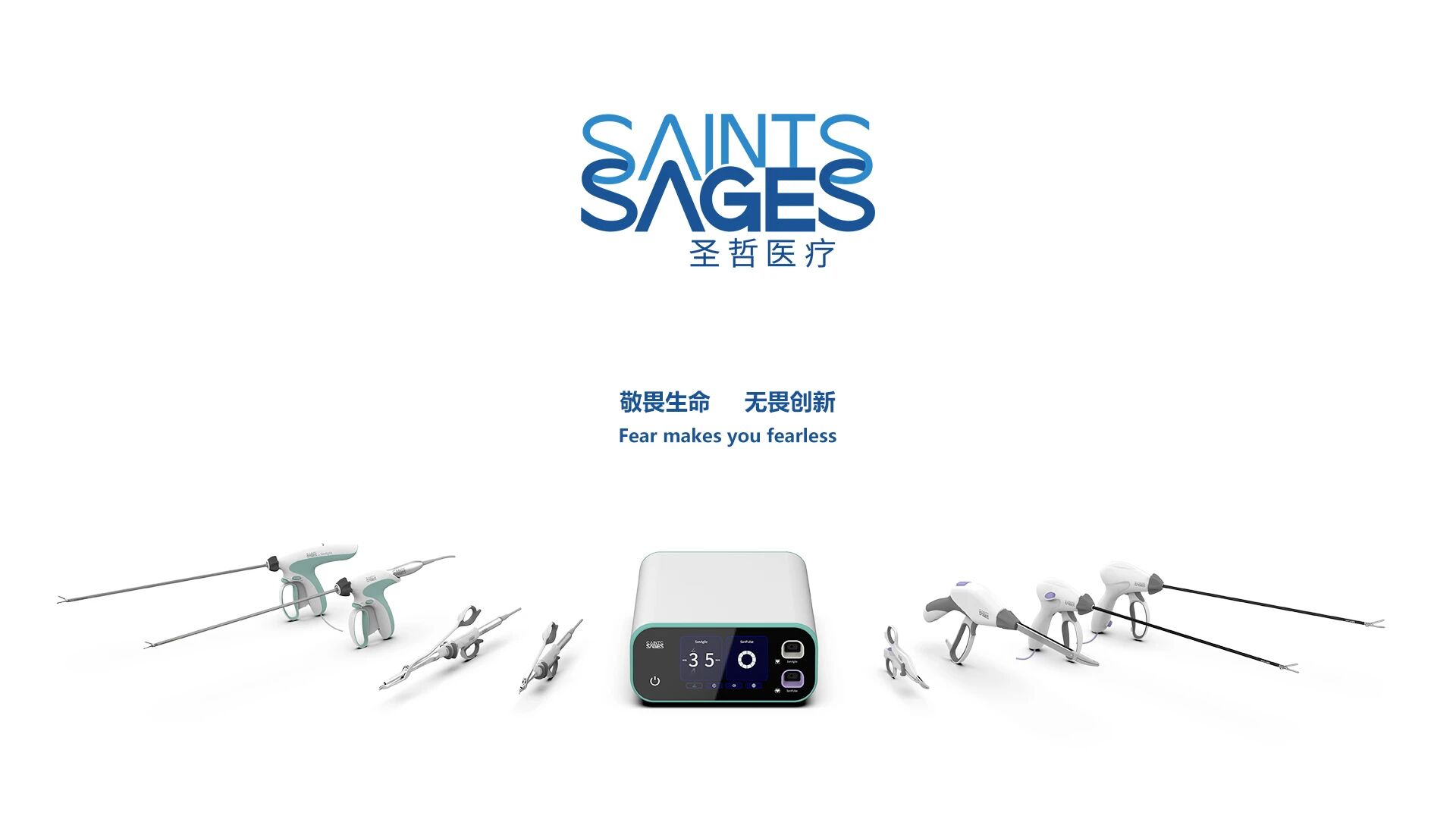
The SA100 Ultrasonic High - Frequency Integrated Surgical Device is independently developed by Saints Sages Surgical. It is the first domestic dual - channel energy platform that can simultaneously achieve the 7mm Advanced Hemostasis function under ultrasonic technology and the 7mm large blood vessel coagulation function under advanced bipolar technology, filling the gap in domestic high - end energy instruments.
This device is equipped with the independently developed second - generation Real - time Tissue Effect (RTTE II, real - time tissue adaptive algorithm) and Multi - pulse Tissue Sensing Technology (MPTS, multi - pulse tissue sensing algorithm). Under the ultrasonic module, RTTE II greatly improves the cutting and coagulation effects, significantly optimizing the surgical efficiency and safety. Under the advanced bipolar module, MPTS senses tissue impedance in real - time through 475,000 pulse operations per second, and ensures the irreversible fusion of blood vessels or tissue bundles through a unique combination of energy form and instrument pressure.
At present, the SA100 has obtained the NMPA Class III registration certificate and is applicable to multiple surgical departments such as gastrointestinal surgery, hepatobiliary surgery, gynecology, thoracic surgery, and urology.
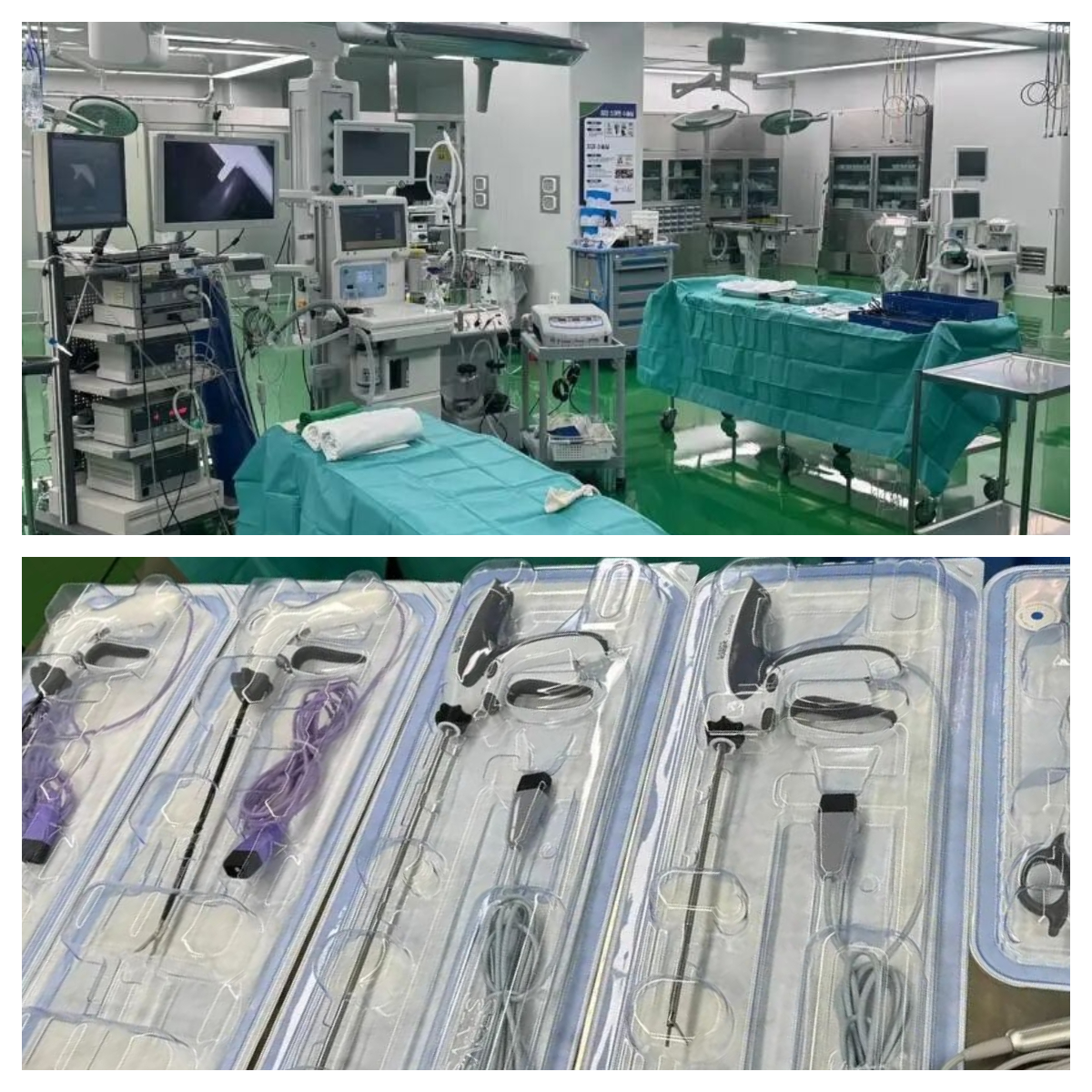
In this experiment, an in vivo animal experimental model (porcine model) was adopted. The corresponding incision position was selected according to the surgical method. When necessary, subcutaneous tissues and muscles were separated, blood vessels were freed, and the separation, closure, and cutting of tissues, blood vessels, and bundles were carried out, including:
• Splenic omentum
• Splenic artery
• Splenic vein
• Gastrosplenic vascular bundle
• Short gastric arteriovenous bundle
• Renal artery
• Renal vein
• Ovarian pedicle bundle
• Broad ligament bundle
• Uterine arteriovenous vascular bundle
• Carotid artery
• Deep cervical vein
• Common jugular vein
• Axillary artery
• Axillary vein
During cutting and closure, objective eva1uation indicators such as closure time, maximum closure temperature, incidence of tissue carbonization and adhesion, and mechanical cutting performance were used to eva1uate the instrument.
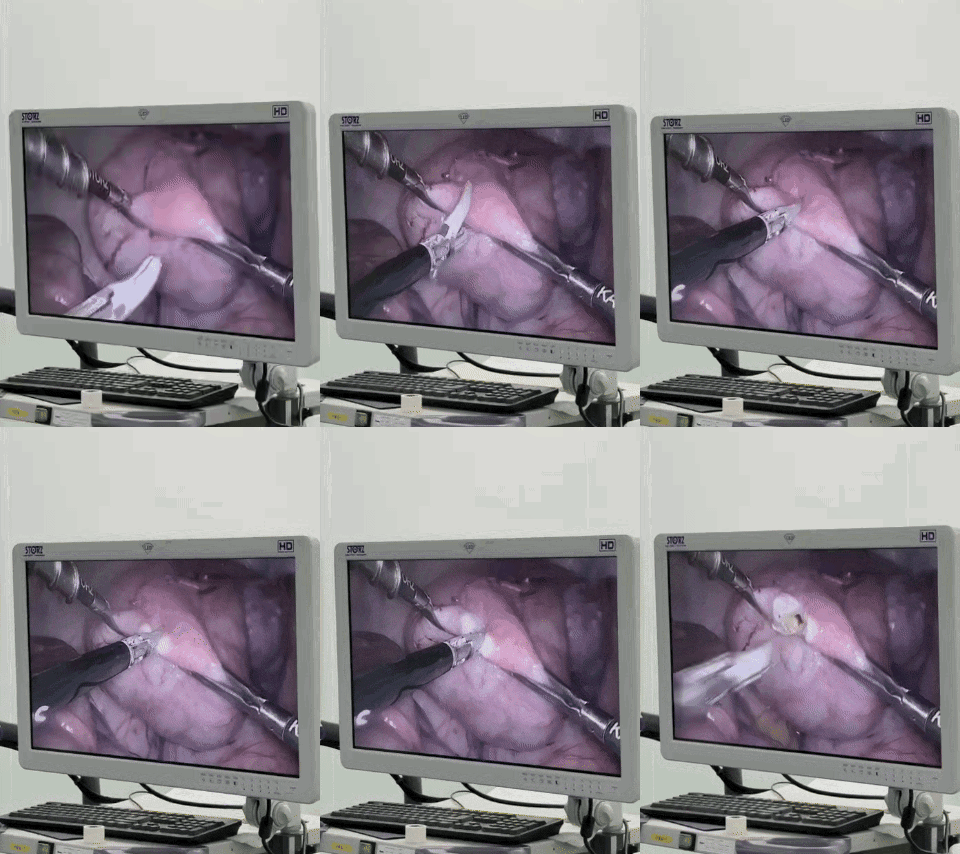
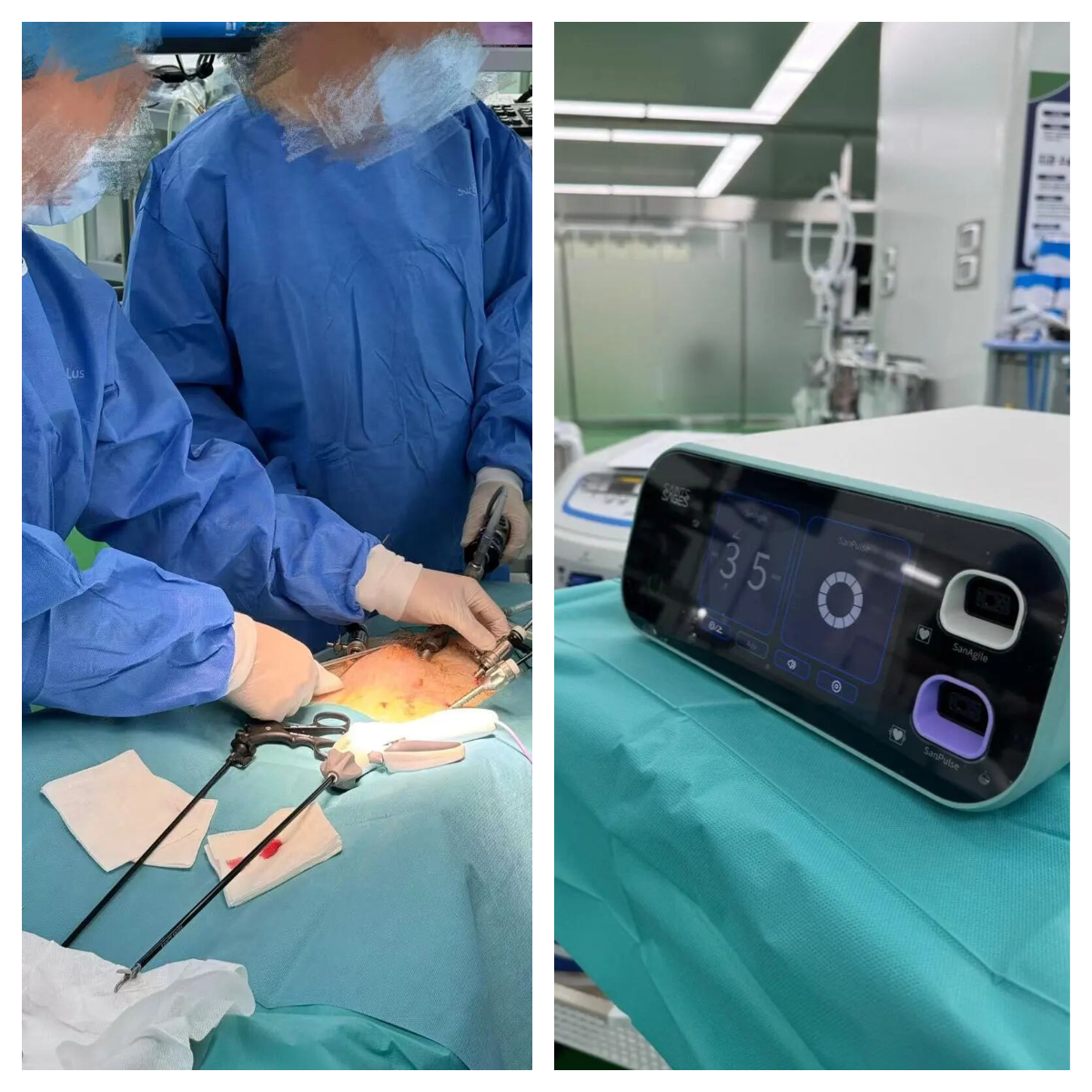
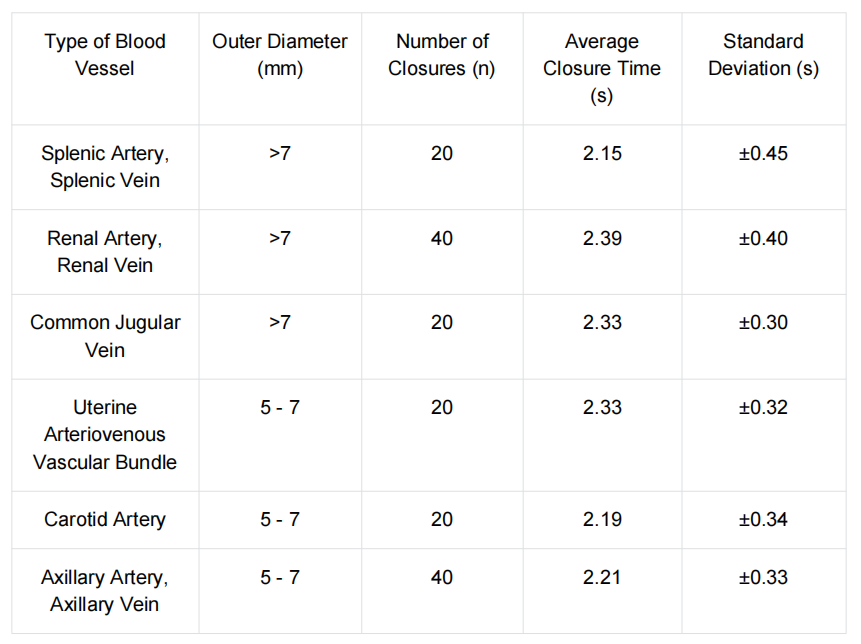
The experimental group performed 80 cuts and closures on blood vessels and bundles with an outer diameter of 1 - 3mm, 3 - 5mm, 5 - 7mm, and above 7mm in animals. The closure success rate reached 100%, and there was no bleeding in the blood vessels.
The experimental group performed 20 closures on splenic arteries and splenic veins with an outer diameter of more than 7mm, and the average closure time was 2.15 ± 0.45s.
The experimental group performed 40 closures on renal arteries and renal veins with an outer diameter of more than 7mm, and the average closure time was 2.39 ± 0.40s.
The experimental group performed 20 closures on common jugular veins with an outer diameter of more than 7mm, and the average closure time was 2.33 ± 0.30s.
The experimental group performed 20 closures on uterine arteriovenous vascular bundles with an outer diameter of 5 - 7mm, and the average closure time was 2.33 ± 0.32s.
The experimental group performed 20 closures on carotid arteries with an outer diameter of 5 - 7mm, and the average closure time was 2.19 ± 0.34s.
The experimental group performed 40 closures on axillary arteries and axillary veins with an outer diameter of 5 - 7mm, and the average closure time was 2.21 ± 0.33s.
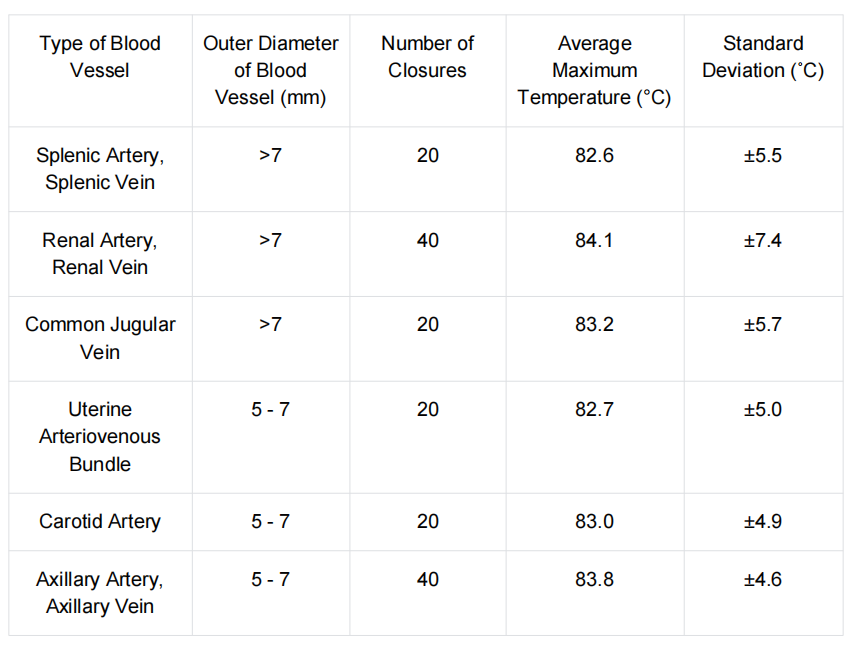
c) Maximum Closure Temperature (Only Medium and Large Blood Vessels are Shown)
The experimental group performed 20 closures on splenic arteries and splenic veins with an outer diameter of more than 7mm, and the average maximum closure temperature was 82.6 ± 5.5℃.
The experimental group performed 40 closures on renal arteries and renal veins with an outer diameter of more than 7mm, and the average maximum closure temperature was 84.1 ± 7.4℃.
The experimental group performed 20 closures on common jugular veins with an outer diameter of more than 7mm, and the average maximum closure temperature was 83.2 ± 5.7℃.
The experimental group performed 20 closures on uterine arteriovenous vascular bundles with an outer diameter of 5 - 7mm, and the average maximum closure temperature was 82.7 ± 5.0℃.
The experimental group performed 20 closures on carotid arteries with an outer diameter of 5 - 7mm, and the average maximum closure temperature was 83.0 ± 4.9℃.
The experimental group performed 40 closures on axillary arteries and axillary veins with an outer diameter of 5 - 7mm, and the average maximum closure temperature was 83.8 ± 4.6℃.
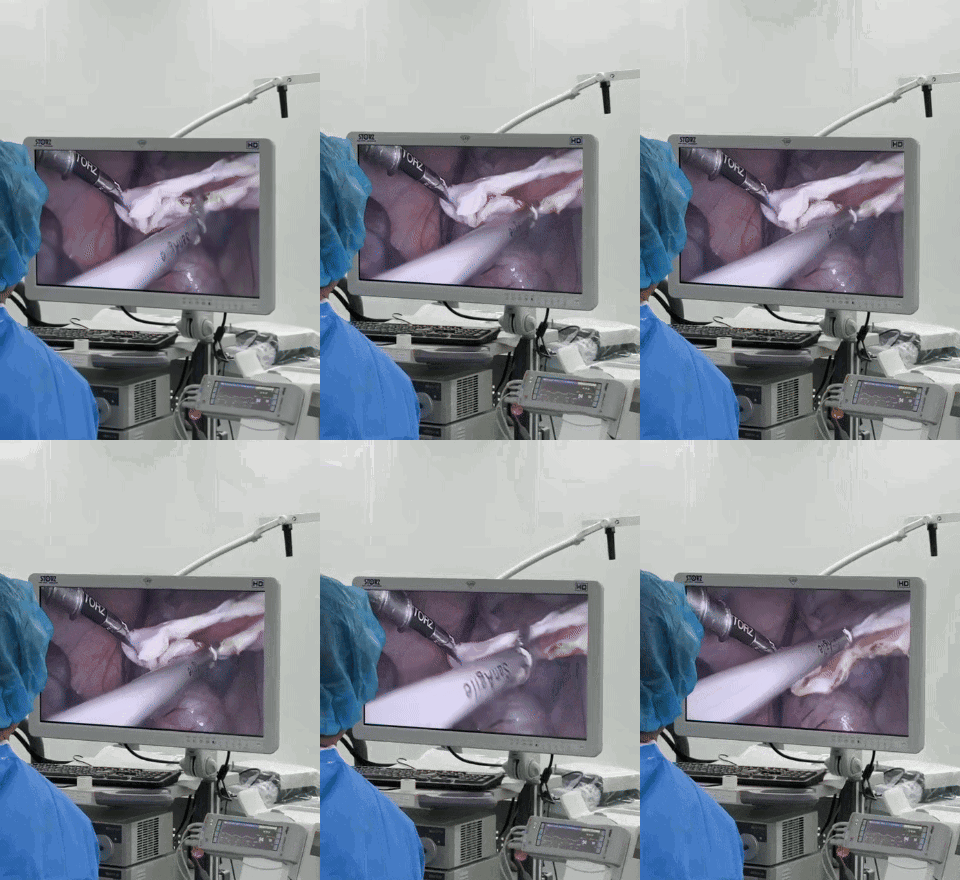
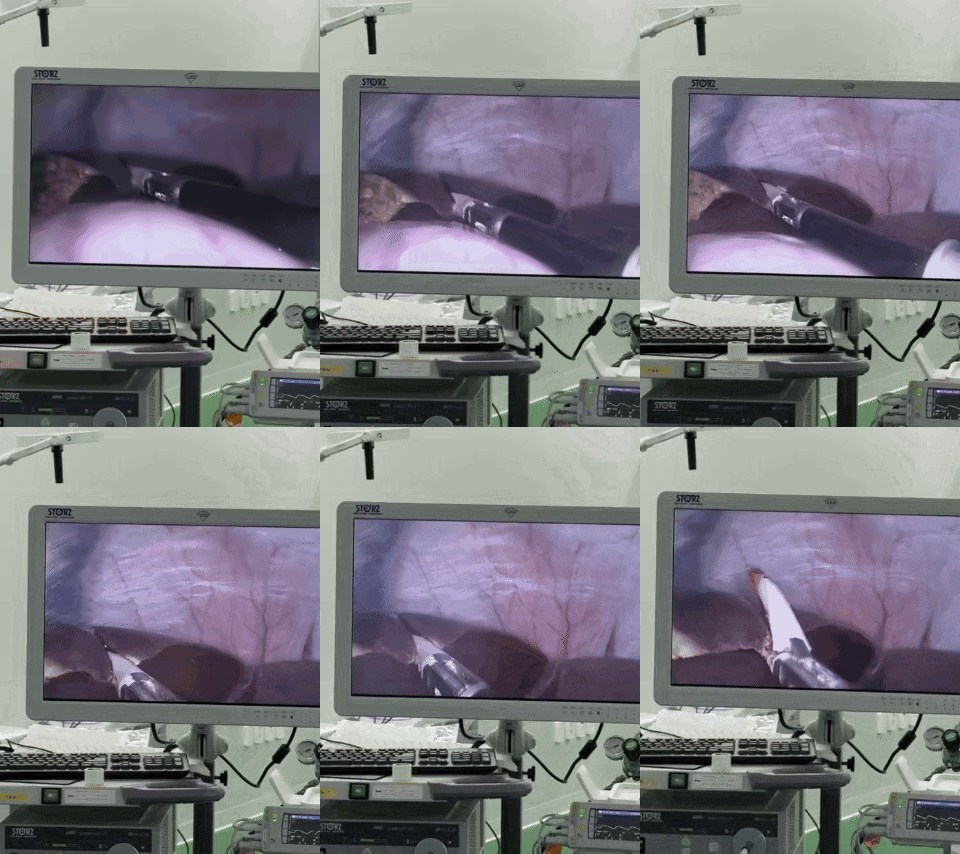
Under the conditions of this experiment, the SA100 series products cut and closed blood vessels and tissue bundles with an outer diameter of 1 - 3mm, 3 - 5mm, 5 - 7mm, and above 7mm in experimental animals in vivo. The closure success rate was as high as 100%, the closure time was about 2 seconds, the maximum temperature on the instrument surface was only about 80℃ under multiple activation states, resulting in little thermal damage to tissues. In addition, during the use under violent working conditions, the performance of the instrument and equipment was stable and reliable.
"Sealing is so reliable! One of the best products I’ve ever used!"
"Outstanding! I mean, minimal lateral thermal damage provides greater peace of mind when I approach critical parts."
"I did use it to seal the bundle almost around 10 mm, amazing…"
"The handle design provides excellent ergonomics and a very comfortable grip."
"Easy to use, plug - and - play and it was so efficient."
"The system feels highly intelligent — it gives a real sense of the future of surgery."
【Chinese Innovation Empowers Global Healthcare】
We would like to thank the surgical experts for their professional contributions and all teams for their hard work. The SA100 will continue to be optimized and verified in more clinical scenarios. We welcome global partners to work together to promote the development of the energy surgery industry.
The overseas debut of the SA100 not only verifies the product strength but also marks the entry of high - end medical equipment made in China into the global market. We will work together with our partners to promote more reliable and efficient energy instrument solutions to the world.
As an innovative medical company focusing on surgical energy instruments, rooted in China and with a global perspective, Saints Sages Surgical will continue to uphold the mission of "Revering Life, Courageous in Innovation". We will act in line with the trend, dare to innovate, rely on the professional R & D team and years of experience in clinical transformation, continue to closely meet clinical needs, provide excellent integrated surgical solutions for medical staff around the world, and serve patients globally.
 Official LinkedIn


